
Webinar Setup Wizard
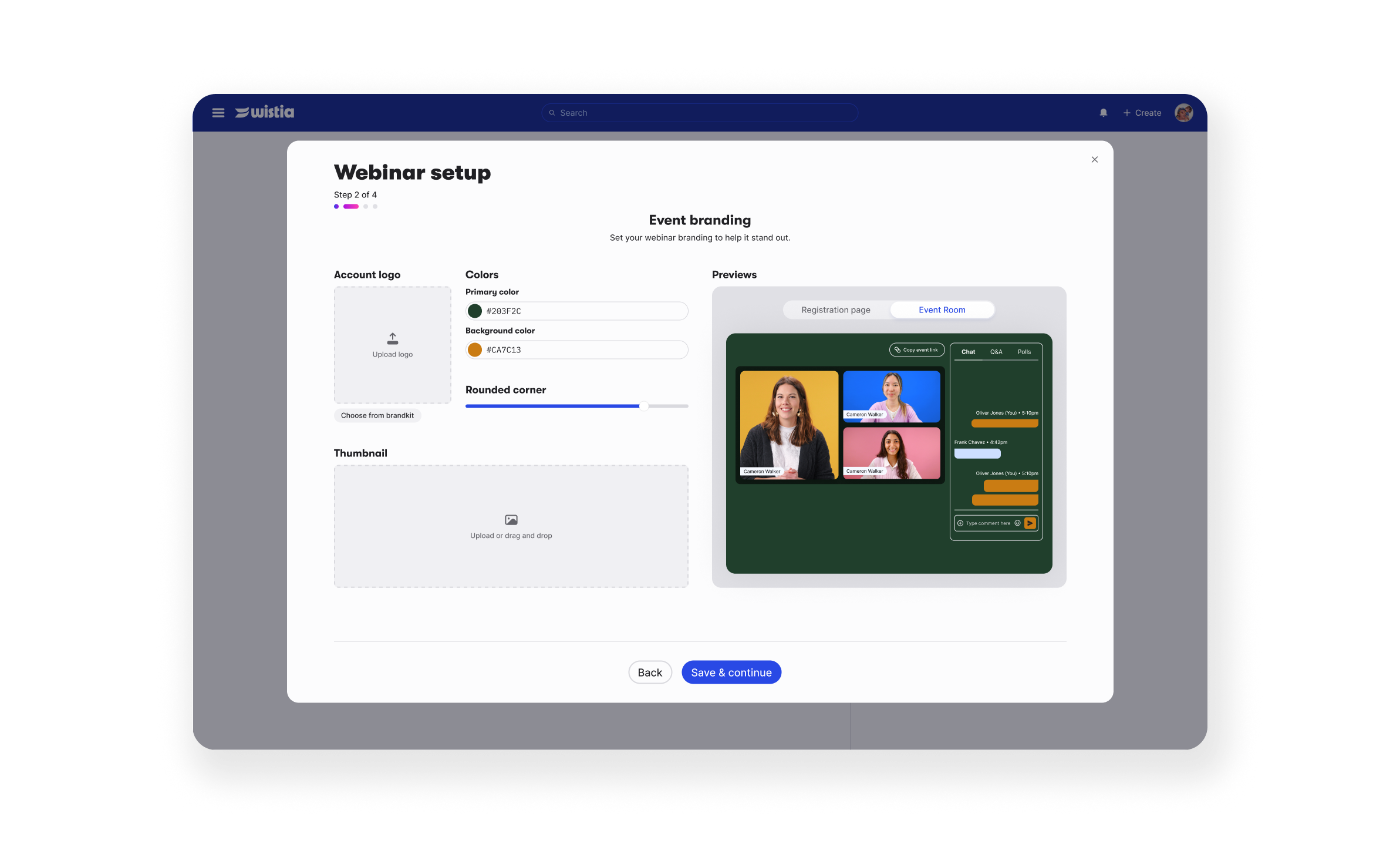
Overview
I turned a setup flow people abandoned into a four-step wizard that doubled real webinars, and it became Wistia's template for setup flows.
Impacts:
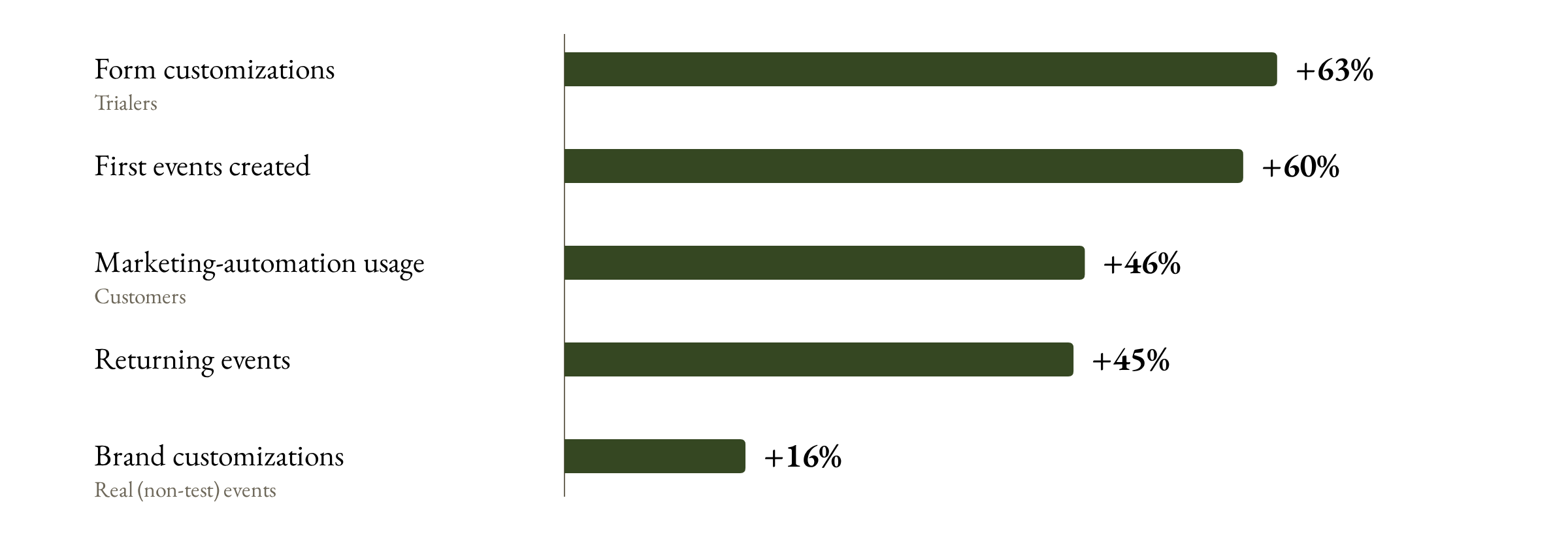
+60% first webinars created
+45% returning events
+63% registration form customizations (trialers)
~2x webinars created and hosted, year over year
What I did: ran the audit that defined the problem, owned the IA, UX and UI, prototyped in Replit to align teams, led QA, and designed the follow-up releases
Team & time: sole designer with a PM and engineers, partnering with the Live team · May–Dec 2025
User problem
New hosts couldn't tell which setup steps mattered, so they created an event and never went live.
Business problem
Webinars are one of Wistia's main upgrade paths, but value only shows up once someone actually hosts. Abandoned events meant weak adoption, lower trial conversion and early churn.
Key stage 1: Reframing the problem with an audit
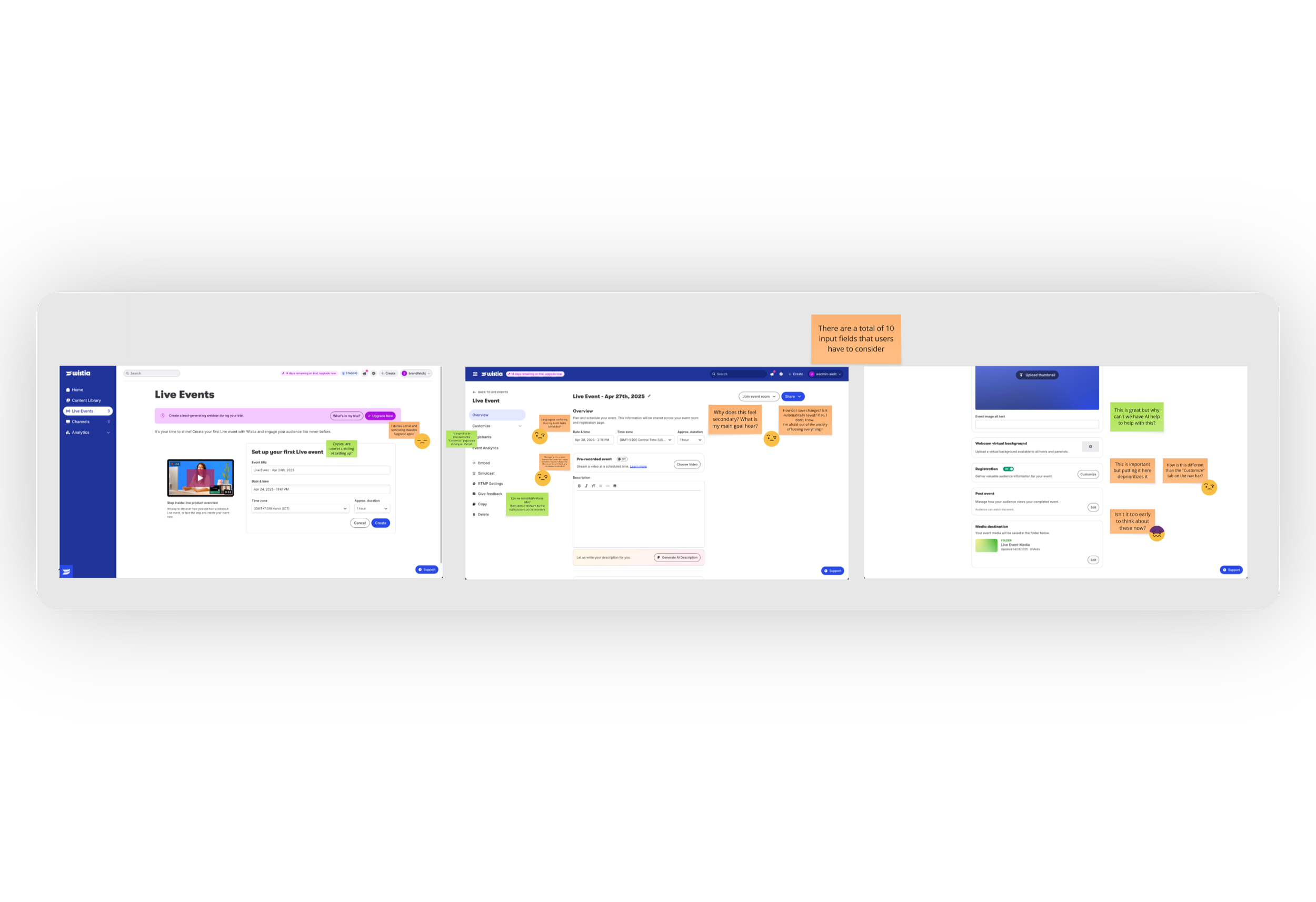
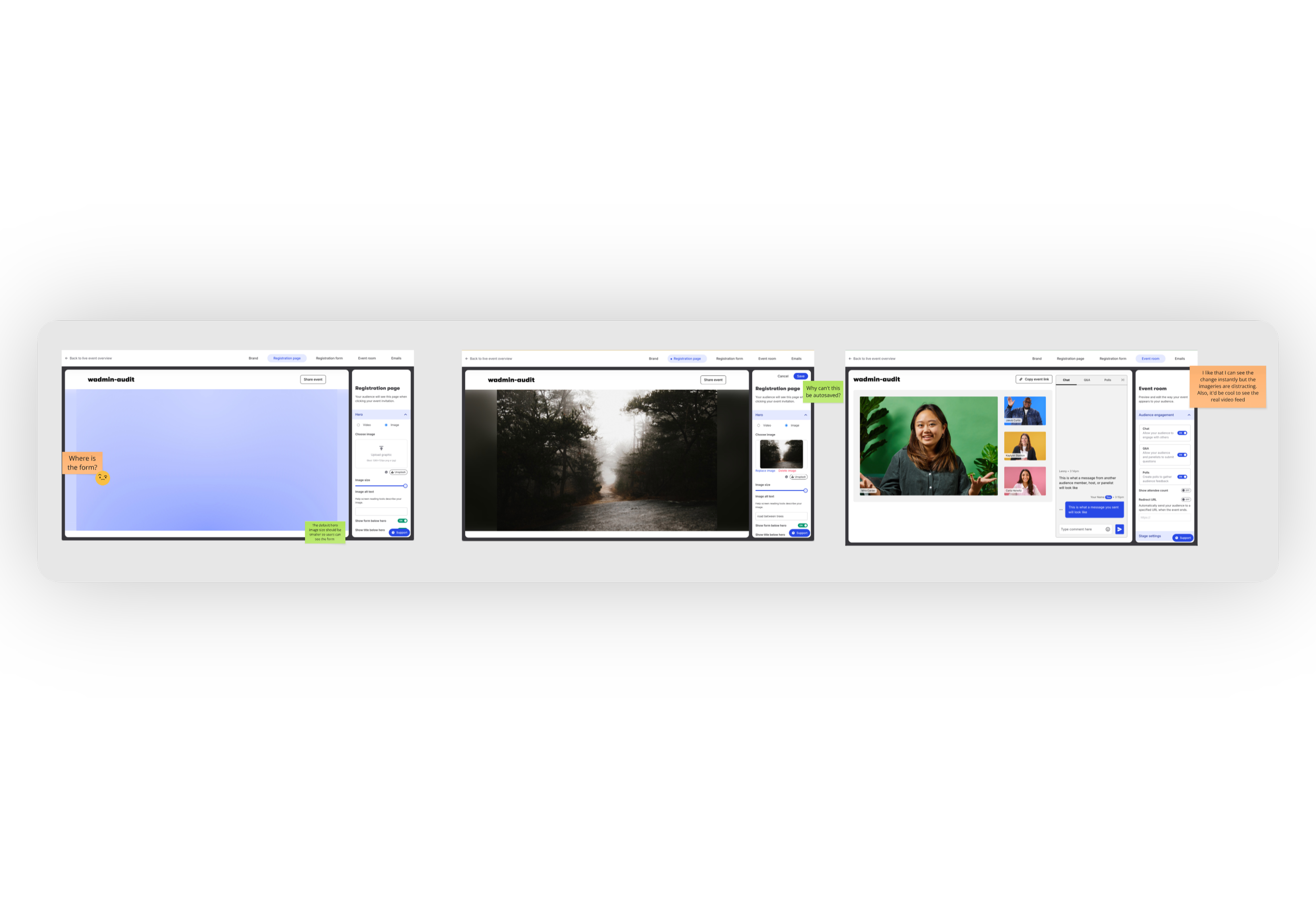
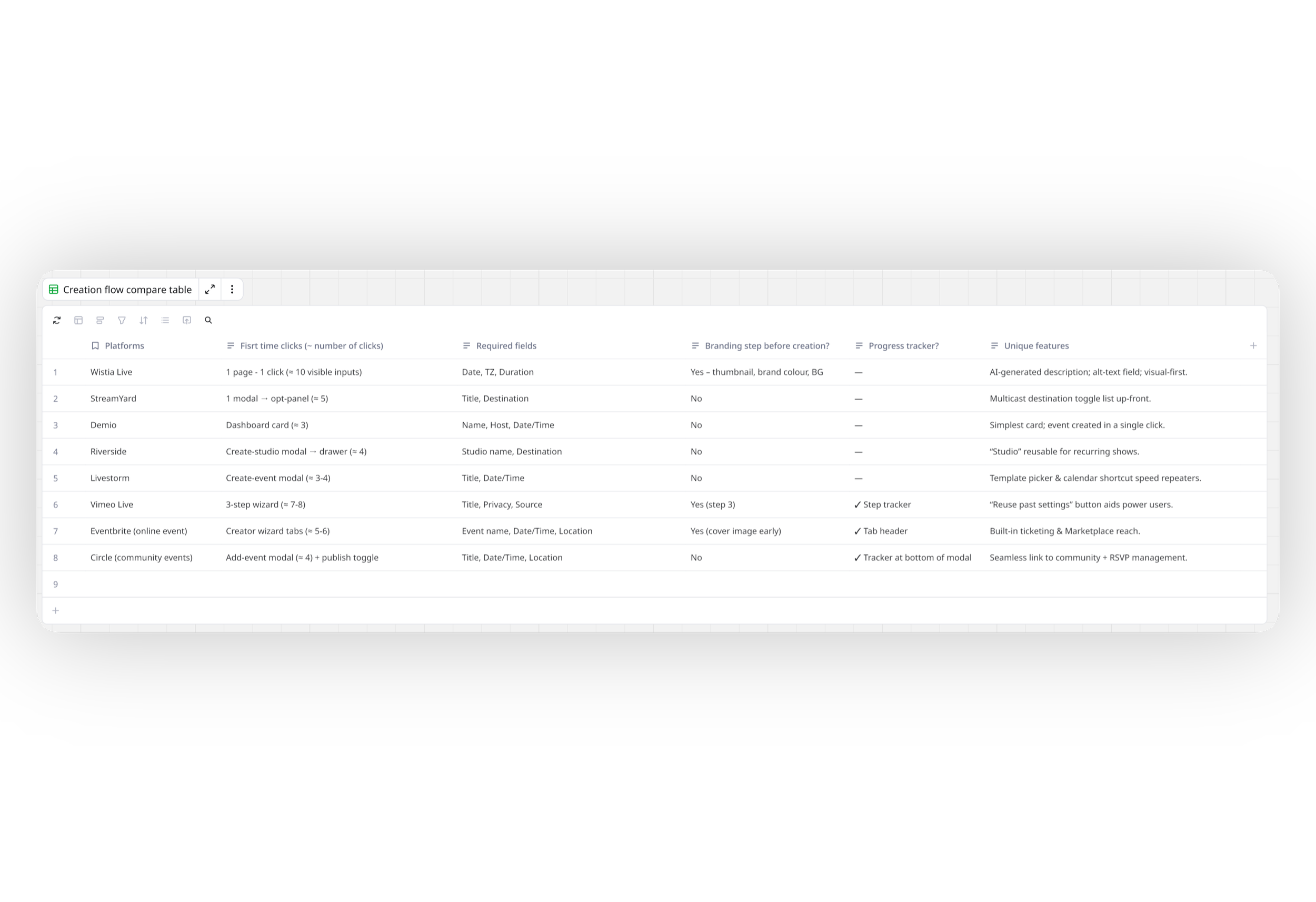
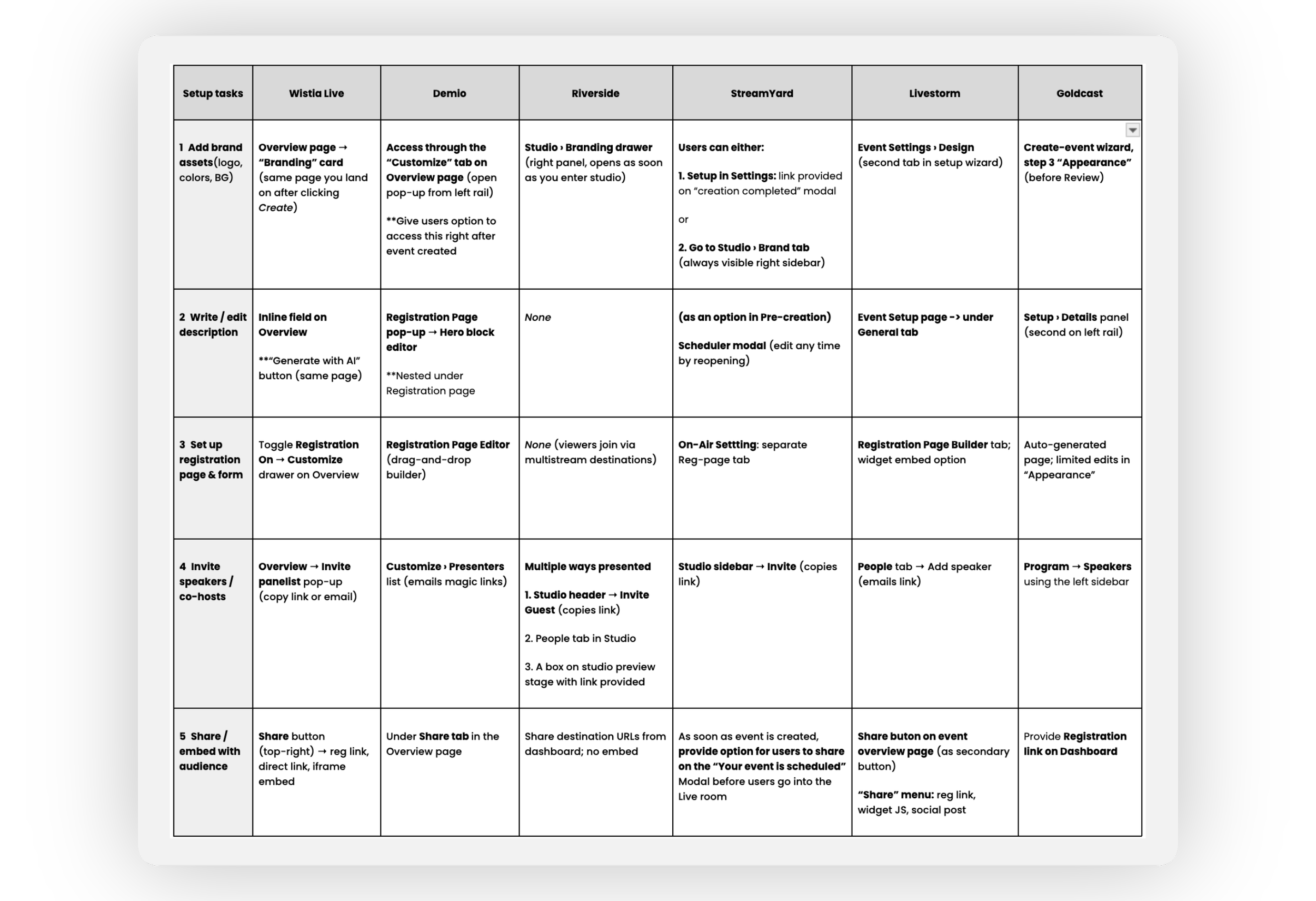
I audited the end-to-end event creation flow of both Wistia and multiple competitors. The pattern was clear:
Creating an event and setting it up were separate journeys
The important steps looked identical to the optional ones
Branding had no preview
Audience features were buried.
The user problem became: "I want to go live, but I can't tell what's essential, so I keep putting it off." That framing got the work onto the T2 2025 roadmap, and I took ownership of the IA and UX.
Key stage 2: Deciding what's essential
I reviewed 10+ setup and 20+ customization options, categorizing them as “must-haves” or “nice-to-haves.” Then after a competitive analysis of nine direct and indirect competitors and multiple team discussions, I distilled the options into four final categories:
Core Logistic:
Event types, Title, Date/time zone, Event description
Brand essentials:
Thumbnail, Logo, Brand colors
Audience access:
Registration page setup, MAP integration (added at later stage as demand from Live team)
Audience engagement
Chat, Q&A, Polls
— Progress indicator iterations —
Key decisions and Tradeoffs:
The event is created as soon as someone clicks Create, so progress isn’t lost.
Smart defaults fill in brand colors, Wistia form, chat/Q&A/polls on.
MAP setup was removed at first due to technical constraint, then restored for 2 main tools (Marketo & Hubspot) per popular demand.
Email settings and simulcast were dropped from the wizard because they would only affect a minority of users.
Key stage 3: Making the hidden visible
With the old flow, users often missed that they could see what their registration page or event room would look like before going live. So, I put a live preview beside every branding and registration step, so each choice shows its result immediately.
For accounts that already had a marketing automation integration, I designed registration variants with the Live team that surface their Marketo or Pardot lists only when relevant. No integration, no clutter.
Key stage 4: Ship without A/B test, then iterate
With volume too low for a test, we flipped from "new users only" to everyone and leaned on QA and fast follow-ups instead.
Cross-team QA surfaced dual-scroll preview issues, and a confusing MAP form selection flow. After launch, I shipped a registration step refresh, consolidated headers that were causing extra scrolling on small laptops, and a relaunch entry point for users who exited early.
Outcome
Shipped December 9, 2025. In the first ten weeks compared with the period before launch:
First events created up 60%, returning events up 45%
Brand customizations up 16% for real events, form customizations up 63% for trialers
MAP usage (forms + lists) up 46% for customers, with over 500 events using a custom integration in January for the first time
Purchases and upgrades unaffected
By mid-2026, real webinars created and hosted had roughly doubled year over year (~+105% in Q1), and anyone who reached step two had an 83% chance of finishing all four steps. In the team retro: "Wizard as a precedent for other setup flows. Lots of buzz in the org." The channel and playlist setup flow was later modeled on it.
Honest caveat: this was a before/after read, not a randomized test, and the Live team shipped other improvements in the same period. Every metric moved the same direction, but I present it as a strong contributor, not the sole cause.
Learnings & next steps
An audit is a design deliverable. Framing the problem myself is what turned this from a ticket into a project I owned, and it's how I'd start any ambiguous flow again.
Defaults beat options. The biggest wins came from what users no longer had to decide.
Setup isn't the finish line. Creation went up but hosting stayed flatter, which led directly to my next project: a sample completed webinar and guided tour that showed trialers what a finished webinar looks like (the tour roughly doubled first-time hosts' Webinars Plus trial starts, from 2% to 5%).